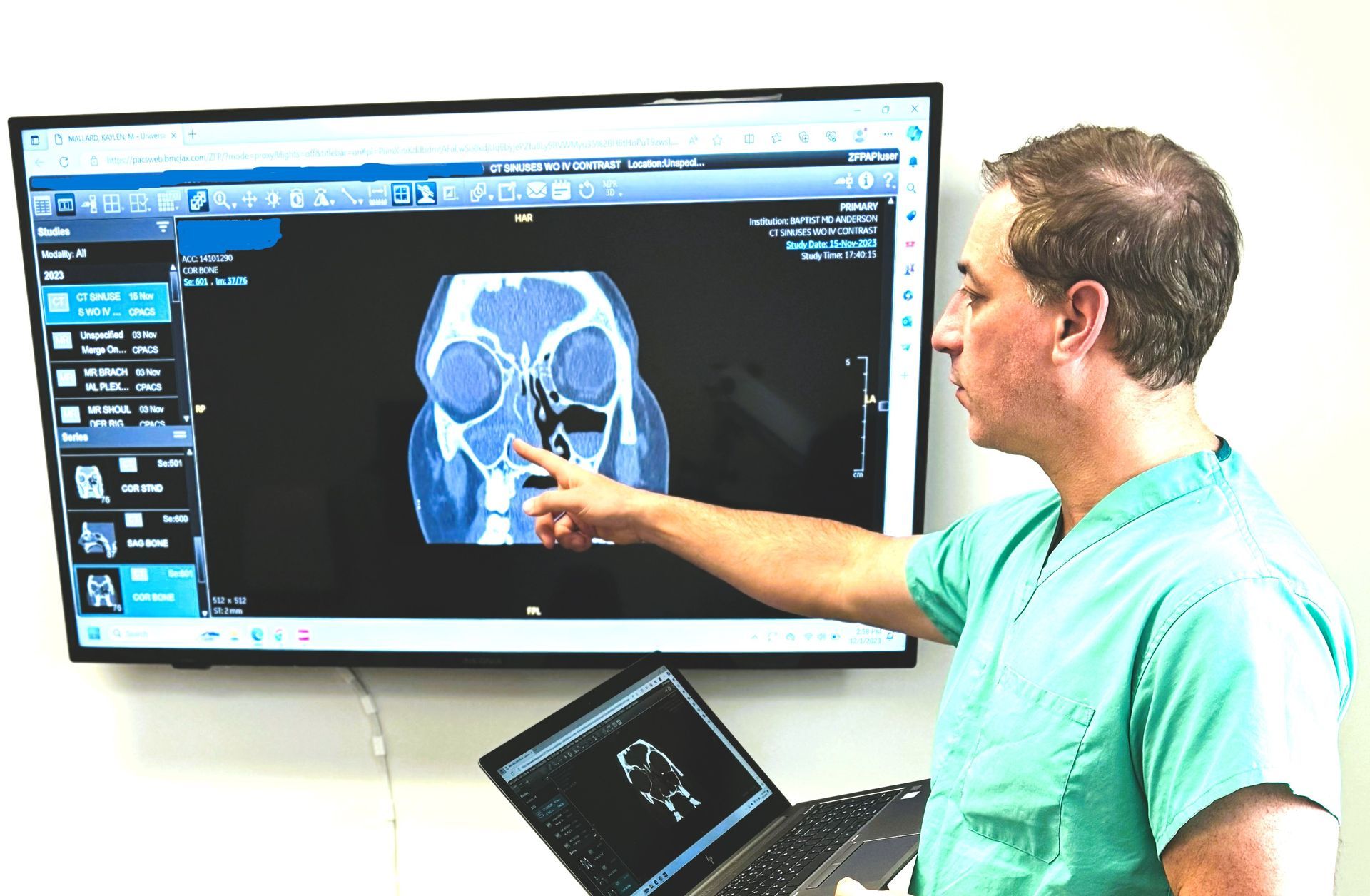

Signs and Symptoms of Skull Base Tumors
Helping You Understand What to Watch for and When to Seek Care
Skull base tumors are rare growths that develop at the base of the skull—the area behind your eyes and nose where important nerves, blood vessels, and brain structures pass through. Because this area is so complex, tumors here can cause a wide range of symptoms—many of which are subtle or easy to overlook. Early recognition and evaluation can make a meaningful difference in outcomes.
What Is a Skull Base Tumor?
A skull base tumor is an abnormal growth in the bones and tissues at the bottom of the skull. These tumors may be:
- Benign (noncancerous)
- Malignant (cancerous)
Symptoms of skull base tumors depend on where the tumor is located and how large it becomes. In many cases, symptoms develop gradually as the tumor presses on nearby nerves, blood vessels, or brain structures.
Common Signs and Symptoms of Skull Base Tumors
The symptoms listed below do not necessarily mean you have a skull base tumor, but they should be discussed with a medical specialist—especially if they are persistent, worsening, or unexplained. Only a qualified medical professional can diagnose a skull base tumor.
1. Headaches
Frequent, worsening, or unusual headaches that do not improve with standard treatments may be an early warning sign of a skull base tumor.
2. Vision Changes
- Blurred vision
- Double vision
- Partial or complete loss of vision
Tumors near the optic nerves can interfere with how the eyes focus or transmit visual information.
3. Hearing Problems
- Hearing loss
- Ringing in the ears (tinnitus)
Pressure on nerves involved in hearing may affect your ability to hear clearly.
4. Changes in Sense of Smell
Tumors near the front of the skull can affect the sense of smell, sometimes before other symptoms appear.
5. Difficulty Swallowing or Breathing
If a tumor presses on structures in the throat or airway, it may cause trouble swallowing or breathing normally.
6. Facial Numbness or Weakness
Facial numbness, tingling, or weakness can occur when skull base tumors compress facial nerves.
7. Balance or Coordination Problems
Dizziness, unsteadiness, or difficulty with coordination may indicate involvement of balance-related nerves or the brainstem.
8. Nausea and Cognitive Changes
Some individuals experience persistent nausea or subtle changes in memory, focus, or concentration.
Why Skull Base Tumor Symptoms Can Be Missed
Skull base tumors often grow slowly, and early symptoms may resemble common conditions such as sinus infections, migraines, or nerve irritation. Because of this, many people delay evaluation, assuming symptoms are minor or temporary.
At Jacksonville Sinus & Nasal Institute, we specialize in determining when symptoms are related to sinus disease versus more complex skull base conditions.
When To See a Fellowship-Trained Skull Base Specialist
You should consider scheduling an evaluation with a skull base specialist if you:
- Have symptoms that persist for several weeks
- Notice progressive changes in vision, hearing, or sense of smell
- Experience facial numbness, balance problems, or difficulty swallowing
Early evaluation allows for advanced imaging, such as MRI or CT scans, and helps guide the most appropriate treatment plan.
Skull Base Surgery and Specialty Care in Jacksonville, Florida
If you are experiencing concerning symptoms, early assessment is important. At Jacksonville Sinus & Nasal Institute, our fellowship-trained rhinologists provide expert care for sinus and skull base conditions, including tumors. We offer:
- Specialized expertise in nose, sinus, and skull base conditions
- Advanced diagnostic imaging and endoscopic evaluation
- Access to skull base surgery and tumor management
- Personalized care from fellowship-trained rhinologists committed to making complex care understandable and effective.
Contact Jacksonville Sinus & Nasal Institute today to schedule a consultation with a skull base specialist in Jacksonville, Florida.