
When Is Frontal Sinus Surgery Needed? Signs It May Be Time to See a Specialist
If you've been dealing with constant forehead pressure, recurring sinus infections, or congestion that never seems to clear up, you may be wondering whether surgery is the next step. While most cases of frontal sinusitis improve with medications, nasal sprays, allergy management, or other nonsurgical treatments, some people continue to experience chronic symptoms. In those situations, frontal sinus surgery may help restore normal drainage and provide lasting relief.
What Are the Frontal Sinuses?
You probably don't think much about your frontal sinuses until they start causing problems. These air-filled spaces sit just behind your forehead, above your eyes, and play an important role in keeping your nose and sinuses healthy. They produce mucus that traps dust and germs before draining naturally into your nasal passages.
Normally, mucus drains through small openings into the nose. When these drainage pathways become blocked by inflammation, allergies, infections, nasal polyps, or structural problems, mucus can build up inside the frontal sinuses.
This blockage can lead to chronic frontal sinusitis, causing symptoms such as forehead pressure, headaches, nasal congestion, and recurring sinus infections.
What Causes Chronic Frontal Sinusitis?
There isn't always a single cause of chronic frontal sinusitis. For many people, it's a combination of ongoing inflammation and blocked drainage. Allergies, nasal polyps, a deviated septum, previous infections, or naturally narrow sinus passages can all contribute to symptoms that keep coming back.
Signs It May Be Time to See a Sinus Specialist
If your sinus symptoms continue despite treatment, a comprehensive evaluation by an ENT specialist can help determine the underlying cause.
Occasional sinus pressure during a cold is normal. But if your symptoms keep returning—or never fully go away—it may be time for a more thorough evaluation. An ENT specialist can determine whether chronic frontal sinusitis or another condition is responsible.
You should consider seeing an ENT specialist if you experience:
- Sinus symptoms lasting longer than 12 weeks
- Several sinus infections each year
- Persistent pressure between or above your eyes
- Headaches accompanied by nasal congestion or thick drainage
- Difficulty breathing through your nose
- A reduced or lost sense of smell
- Symptoms that repeatedly return after antibiotics
Many conditions, including migraines, allergies, nasal polyps, or a deviated septum, can produce symptoms similar to frontal sinusitis. An accurate diagnosis is essential before considering surgery.
How Is Chronic Frontal Sinus Disease Diagnosed?
Before recommending surgery, your ENT specialist will want to understand exactly what's causing your symptoms. That starts with discussing your medical history, reviewing your symptoms, and examining your nose and sinuses.
Additional evaluation may include:
- Nasal endoscopy, which allows your physician to examine the nasal passages and sinus openings using a thin camera
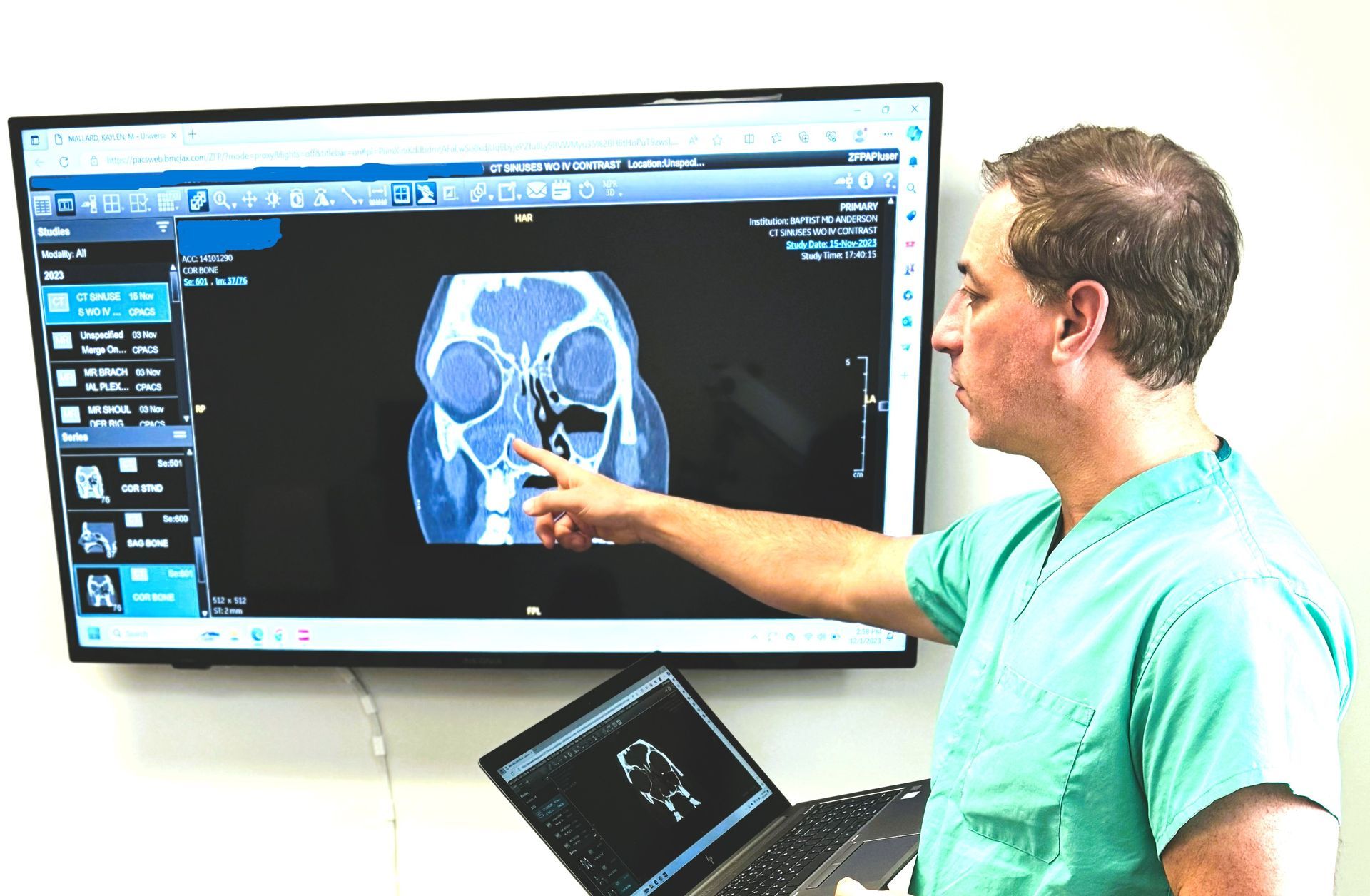
- CT scan, which provides detailed images of the sinuses and helps identify inflammation, blocked drainage pathways, anatomical narrowing, or nasal polyps
These diagnostic tools help determine whether surgery is appropriate and guide treatment planning.
When Is Frontal Sinus Surgery Recommended?
Sinus surgery is usually considered only after less invasive treatments haven't provided enough relief. If medications, saline rinses, nasal steroid sprays, or allergy treatment haven't controlled your symptoms—and imaging shows ongoing blockage—your ENT specialist may recommend frontal sinus surgery.
Most patients undergo several weeks of appropriate medical therapy before surgery is considered. If symptoms persist, your ENT specialist will evaluate several factors before recommending surgery, including:
- Symptoms lasting 12 weeks or longer
- Recurrent sinus infections
- Persistent forehead pressure or pain
- Nasal polyps or blocked sinus drainage
- CT scan findings showing chronic disease
The goal of surgery is to restore normal sinus drainage, reduce inflammation, and help prevent recurring infections. Depending on the location and severity of the blockage, some patients may be candidates for balloon sinuplasty, while others may benefit from endoscopic frontal sinus surgery. Your ENT specialist will recommend the most appropriate treatment based on your symptoms, anatomy, and CT scan findings.
What Happens During Frontal Sinus Surgery?
Today, most frontal sinus procedures are performed using minimally invasive endoscopic sinus surgery.
Rather than making external incisions, the surgeon uses a small endoscope inserted through the nostrils to access the sinuses. Specialized instruments are used to remove tissue causing blockage and enlarge the natural drainage pathway of the frontal sinus.
The goal is to restore normal sinus ventilation and drainage while preserving as much healthy tissue as possible. Depending on the severity of disease, frontal sinus surgery may be performed alone or combined with procedures involving other sinuses.
Recovery After Frontal Sinus Surgery
Recovery is generally smoother than many patients expect. While everyone's healing timeline is different, many people return to their usual daily activities within about a week, depending on the extent of surgery and their individual recovery. Your surgeon will let you know when it's safe to resume exercise and more strenuous activities.
During recovery, your sinus surgeon may recommend:
- Saline nasal irrigations to promote healing
- Prescription nasal sprays or medications
- Follow-up visits for endoscopic cleaning and monitoring
- Avoiding heavy lifting and strenuous exercise for a short period
Mild congestion, drainage, and minor bleeding are common during the first several days. Most patients notice gradual improvement in breathing, sinus pressure, and overall quality of life as healing progresses. Regular follow-up visits allow your surgeon to monitor your healing, remove any crusting, and help ensure the best possible outcome.
Why Choose a Jacksonville Sinus Specialist for Frontal Sinus Surgery?
Because the frontal sinuses are among the most technically challenging areas of the sinus system, experience is an important consideration when choosing a surgeon. An ENT specialist who routinely treats chronic sinus disease can accurately diagnose the problem and recommend the treatment that's most appropriate for your anatomy and symptoms.
At Jacksonville Sinus & Nasal Institute, our Jacksonville sinus specialists diagnose and treat chronic sinus disease using advanced nasal endoscopy, high-resolution CT imaging, and evidence-based treatment options tailored to each patient's needs.